
October 21, 2026
What Forestry Mulching Does for Overgrown Acreage
Reclaiming Palmetto, Underbrush, and Secondary Growth on North Florida Estates and Commercial Parcels
Apex Earthworks grinds overgrown North Florida acreage back into usable ground in a single pass, with no burn piles and no debris hauling.
What Happens to the Land During a Mulching Pass
Overgrown acreage in North Florida rarely looks like open woods. Below the canopy sits a thick layer of palmetto, vines, scrub oak, small trees, and secondary growth that makes the ground hard to walk, impossible to survey, and useless for grazing or building. Whether the property is a ranch near Lake Butler, an estate tract outside High Springs, or a commercial parcel in Lake City, that understory is usually the first thing standing between the owner and the next phase of work.
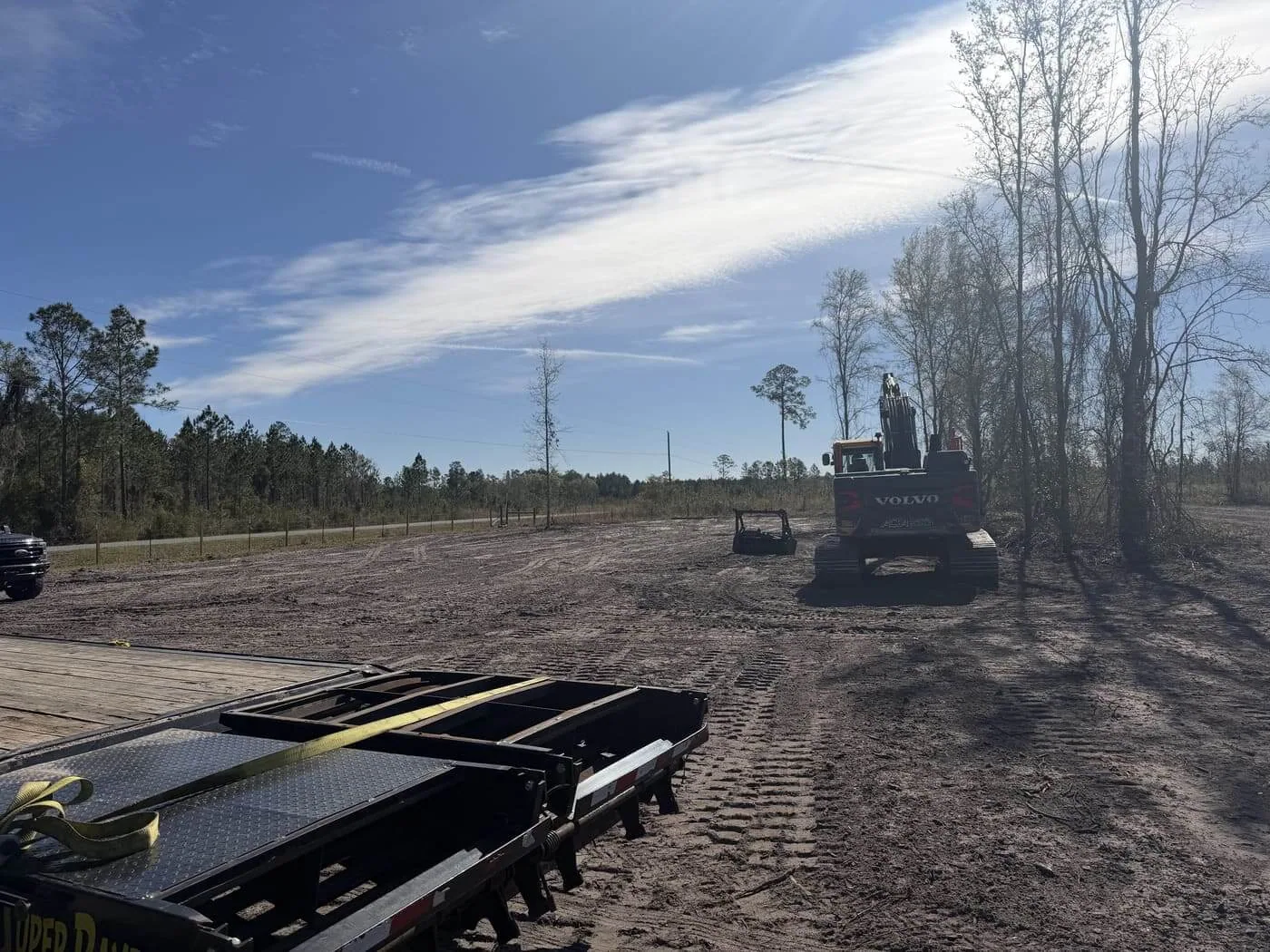
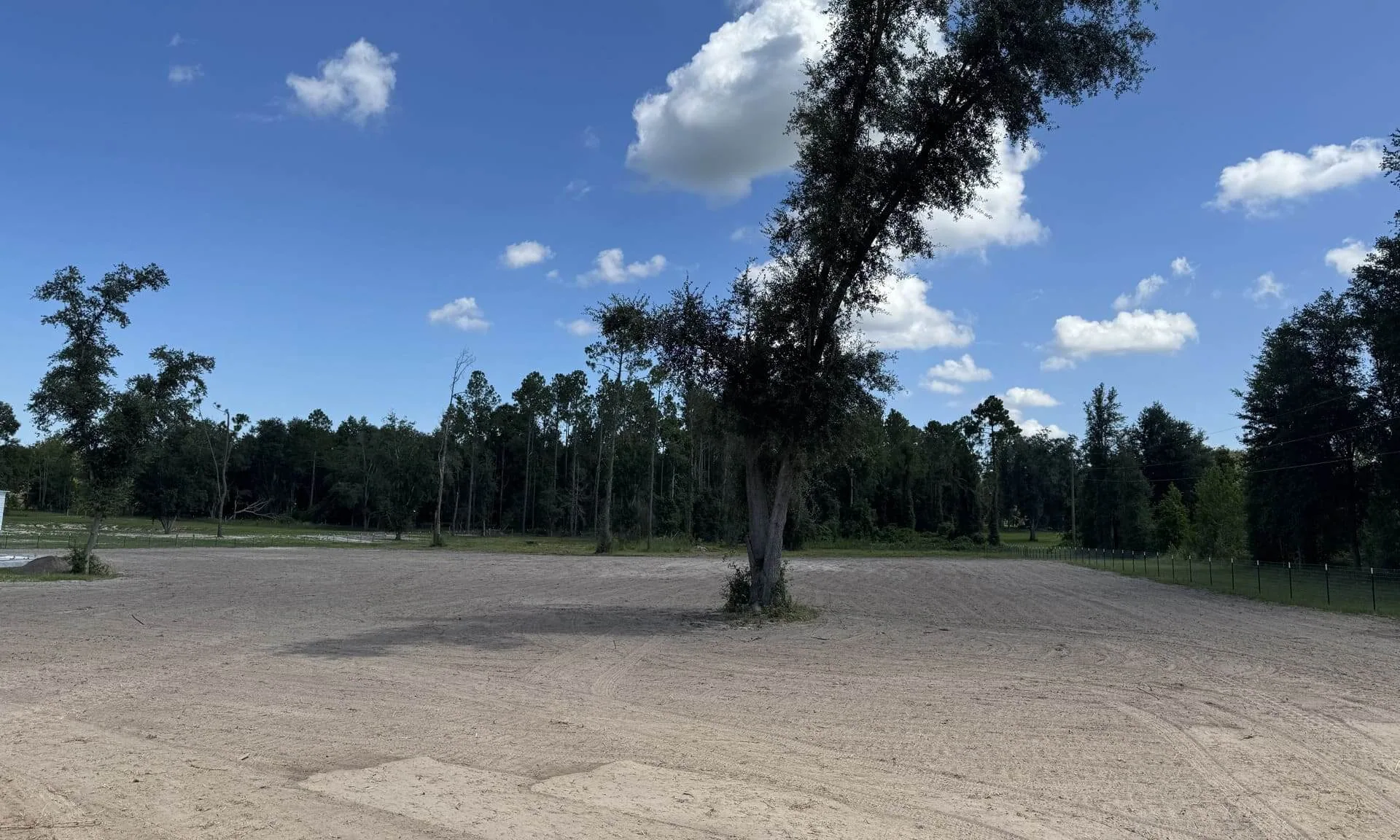
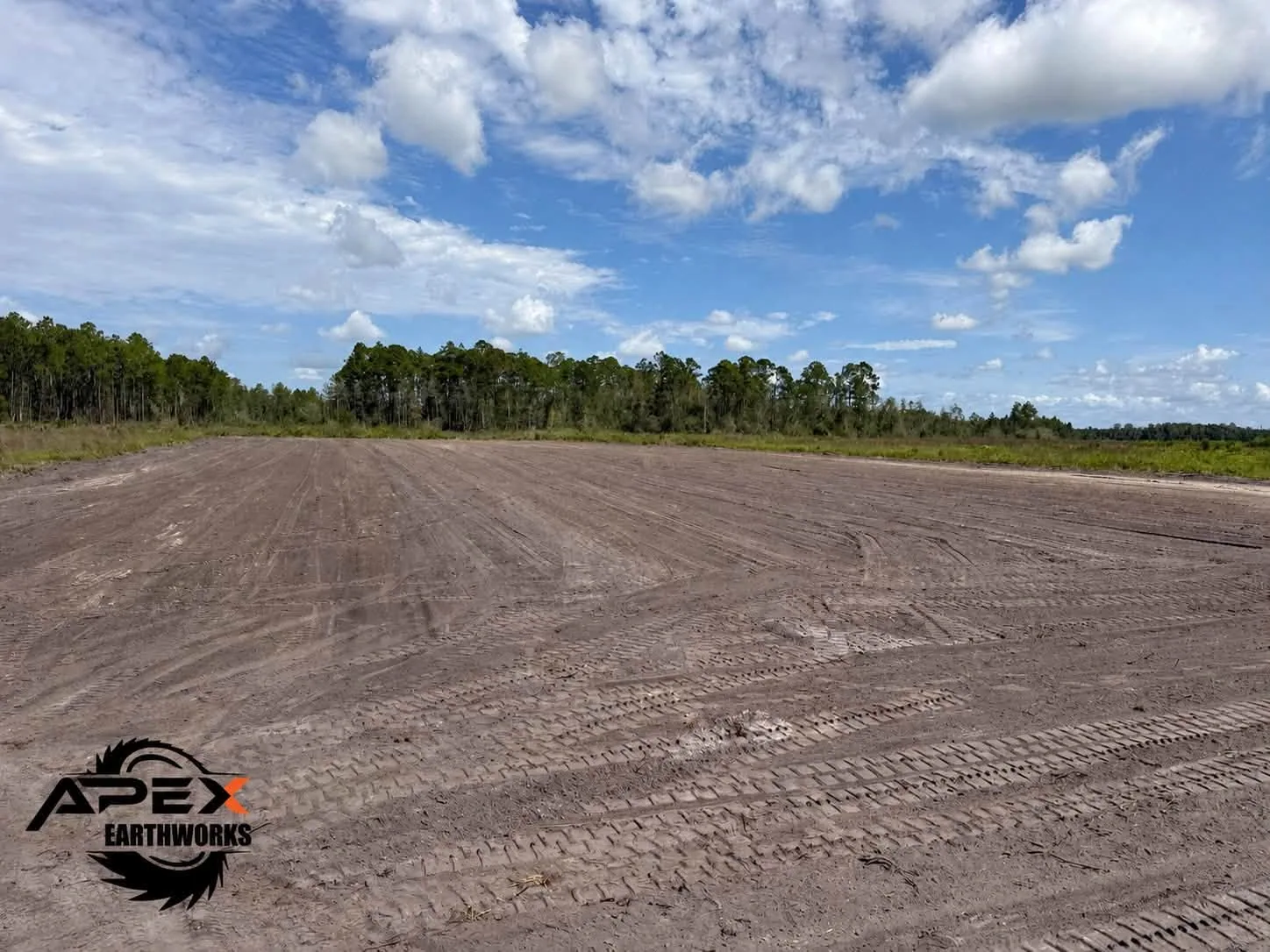
Forestry mulching uses high-horsepower grinding equipment to chew through that vegetation where it stands and leave it on the ground as a layer of mulch. There is no burning, no cutting and stacking, and no string of trucks hauling debris off site. One machine works the property methodically, and when it leaves, the ground is cleared and usable.
The mulch left behind does real work of its own. On the sandy soil common across this region, a ground-level mulch layer helps control erosion and holds moisture, instead of leaving bare, exposed dirt after the crew is gone.
Where Mulching Fits on Overgrown Property
Mulching is at its best when the goal is opening land up rather than stripping it bare. Several kinds of property tend to be a natural fit:
- Multi-acre estates and ranches: Owners reclaiming acreage that has gone wild can open it up in a single pass, and larger trees can stay in place unless they are marked for removal.
- Pastureland and agricultural buffers: Overgrown ground can be returned to use with less erosion risk than bulldozer-only clearing methods.
- Dense palmetto stands and mixed brush: Thick underbrush, palmetto, and scrub oak mulch efficiently, which is exactly the growth that slows traditional cut-and-haul crews.
- Raw land ahead of a build: Developers use mulching to open a parcel before grading, driveway construction, or a full build-out begins.
- Utility corridors and public parcels: Utility companies and municipalities use it to maintain access while limiting soil disturbance and erosion risk, as part of right-of-way clearing work.
When a property only needs what sits below the canopy removed, brush and underbrush clearing with a mulching head is often the whole job. Any larger trees flagged for removal are handled separately from the mulching pass.
When Mulching Is Not the Whole Answer
Mulching is not the right tool for every acre. Because it grinds vegetation at ground level, stumps and root systems stay in the ground. That is an advantage for erosion control, but it means a site headed toward foundations, pavement, or heavy compaction still needs a full land clearing pass once the mulching work opens up the property. Mature hardwoods with extensive root systems may also need to come out completely rather than be mulched.
Regrowth is the other consideration. North Florida brush grows back fast, so a property that is mulched and then left alone will not stay open forever. Clearing it correctly the first time, and planning what comes next, keeps owners from paying for the same work again next season.
On many larger properties, the answer is a combination: mulching across the outer acreage and full clearing near the building pad, access road, or drainage structures. Because mulching is rarely the last step, Apex Earthworks coordinates directly into grading, driveway and access road construction, or further clearing so the property keeps moving toward its end use.
Questions Landowners Ask Before Mulching Overgrown Acreage
What size property is forestry mulching suited for?
Apex Earthworks focuses on multi-acre estates, commercial parcels, agricultural land, and utility or municipal corridors. Projects of several acres or more are the typical scope, rather than small residential backyards.
Do I need a permit to mulch my property?
Permit requirements depend on the property's zoning, size, and intended use after clearing. The site walk is where any local or county requirements get flagged, before work begins.
How long does a mulching project take?
It depends on acreage, vegetation density, and terrain access. A single-pass mulching operation moves faster than cut-and-haul clearing, and a specific timeline comes once the property has been walked and the work scoped.
Open Up Your Acreage With One Pass
Every mulching job starts with a walk of the property to understand the vegetation density, the terrain, and obstacles like fence lines, culverts, protected trees, or drainage paths. From there, Apex Earthworks brings equipment sized for the acreage and returns overgrown ground to use across Lake City, Live Oak, Fort White, Branford, Alachua, and the surrounding 75-mile radius.