
October 21, 2026
Planning a Structural Demolition Project
What Developers and Property Owners Should Know Before a Building Comes Down in North Florida
Apex Earthworks helps clients across Lake City plan demolition from the first site walk to build-ready ground.
Demolition Starts Long Before the First Wall Comes Down
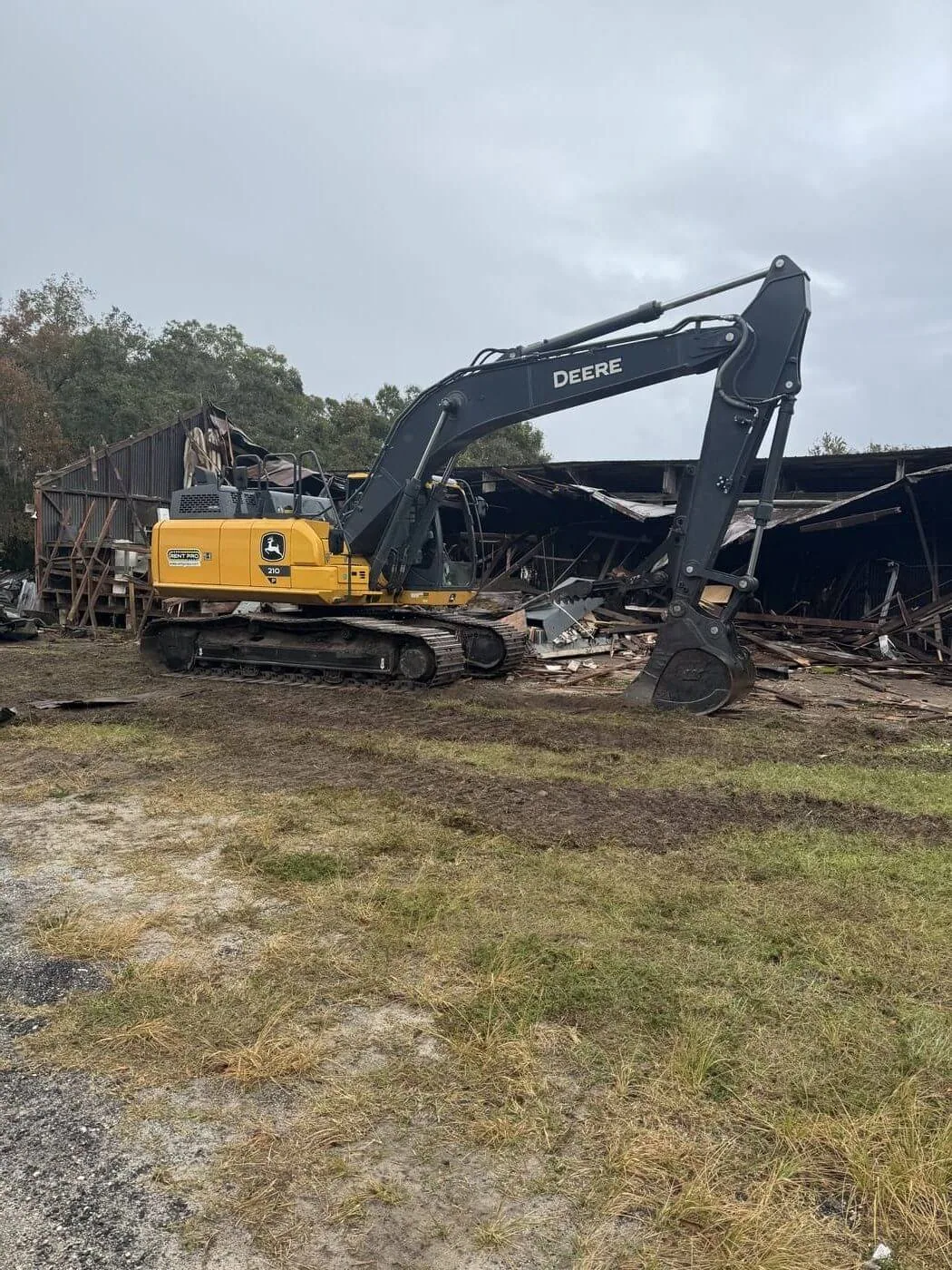
Taking down a commercial building, an old barn, or a worn-out foundation is rarely just an equipment question. The planning done before the excavator arrives decides whether the job stays safe, stays on schedule, and leaves the property ready for its next use. That holds true whether the structure sits in Lake City, a farm outside Live Oak, or a redevelopment site in Gainesville.
The projects that go smoothly usually have a few things settled early:
- Utility disconnects: Power, water, gas, and any other service connections need to be shut off and confirmed safe before demolition begins.
- Permits and approvals: Most structural demolition in Columbia County and the surrounding counties requires permits or utility disconnect confirmations, so those steps belong in the project plan rather than the week work is supposed to start.
- Access for equipment: Excavators and haul trucks need a stable route in and out, which sometimes means clearing brush or building a temporary access road first.
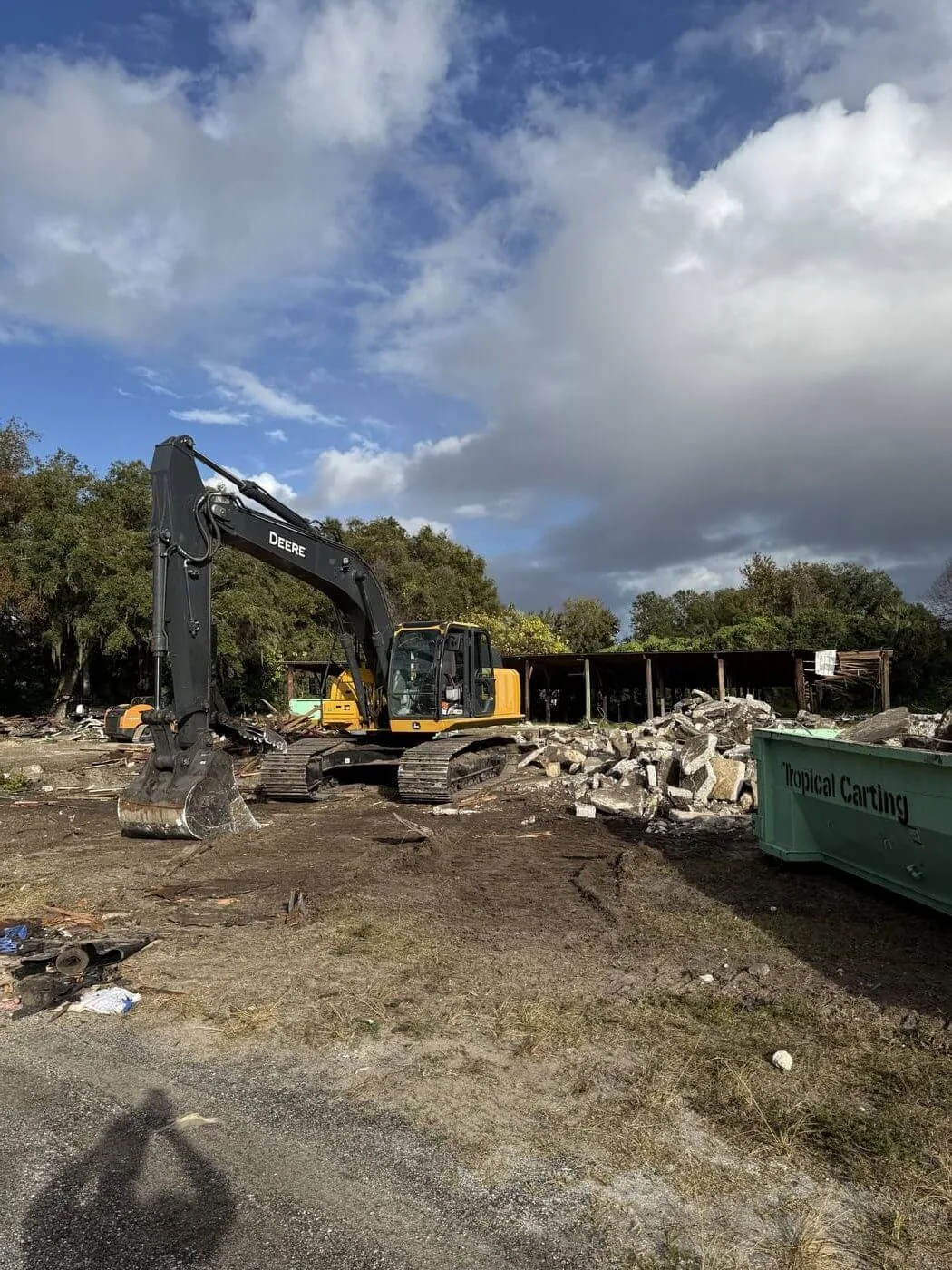
- Debris volume and hauling: Concrete, block, metal, and timber all have to be separated, loaded, and hauled, and that volume should be part of the scope from the start.
- What happens to the ground afterward: A site headed for new construction needs grading and compaction, while farmland or a property going to resale may only need clearing.
Commercial, Agricultural, and Residential Structures
Different structures bring different challenges. Commercial buildings often involve block walls, slabs, and footers that take heavier equipment and generate more debris. Agricultural buildings such as timber-frame barns and storage structures can be partially collapsed or overgrown, which makes the site assessment even more important. Larger residential structures on estates and farms often sit close to trees, fences, or other buildings the owner wants to keep.
In every case, the right structural demolition contractor walks the property first, reviews the structure, and confirms utility locations and access points before any equipment moves in.
Why Demolition and Site Work Belong in One Scope
The most common delay after a demolition is the gap between teardown and the next phase. When one contractor removes the structure and a second has to be scheduled to clear and grade the site, the project waits. Handling demolition, debris removal, land clearing, and excavation and grading under one scope means the property moves from standing structure to build-ready lot without switching crews.
Questions Clients Ask Before Scheduling Demolition
Is debris removal included?
With Apex Earthworks, yes. Demolition debris is separated, loaded, and hauled off site as part of the standard scope, so the property is left clear rather than just torn down.
Can the site be cleared and graded right after demolition?
Yes. Demolition and site clearing are regularly combined into one project, with the area graded or cleared after the structure comes down so it is ready for construction, agriculture, or resale.
Do you take on small shed or garage teardowns?
No. Apex Earthworks focuses on commercial buildings, agricultural structures, foundations, and larger residential structures that call for real planning and heavy equipment.
Get a Demolition Plan That Leaves the Site Ready
A demolition that leaves rubble, open utility questions, or ungraded ground behind is not finished work. Apex Earthworks plans the teardown, hauls the debris, and prepares the ground for what comes next across Lake City, Lake Butler, High Springs, and the surrounding 75-mile radius.