
October 21, 2026
Preparing a Building Pad on North Florida Soil
How Excavation, Grading, and Compaction Set Up a Foundation That Holds
Apex Earthworks prepares building pads across Lake City for commercial projects, shops, and estate construction.
Why the Building Pad Matters More Than It Looks
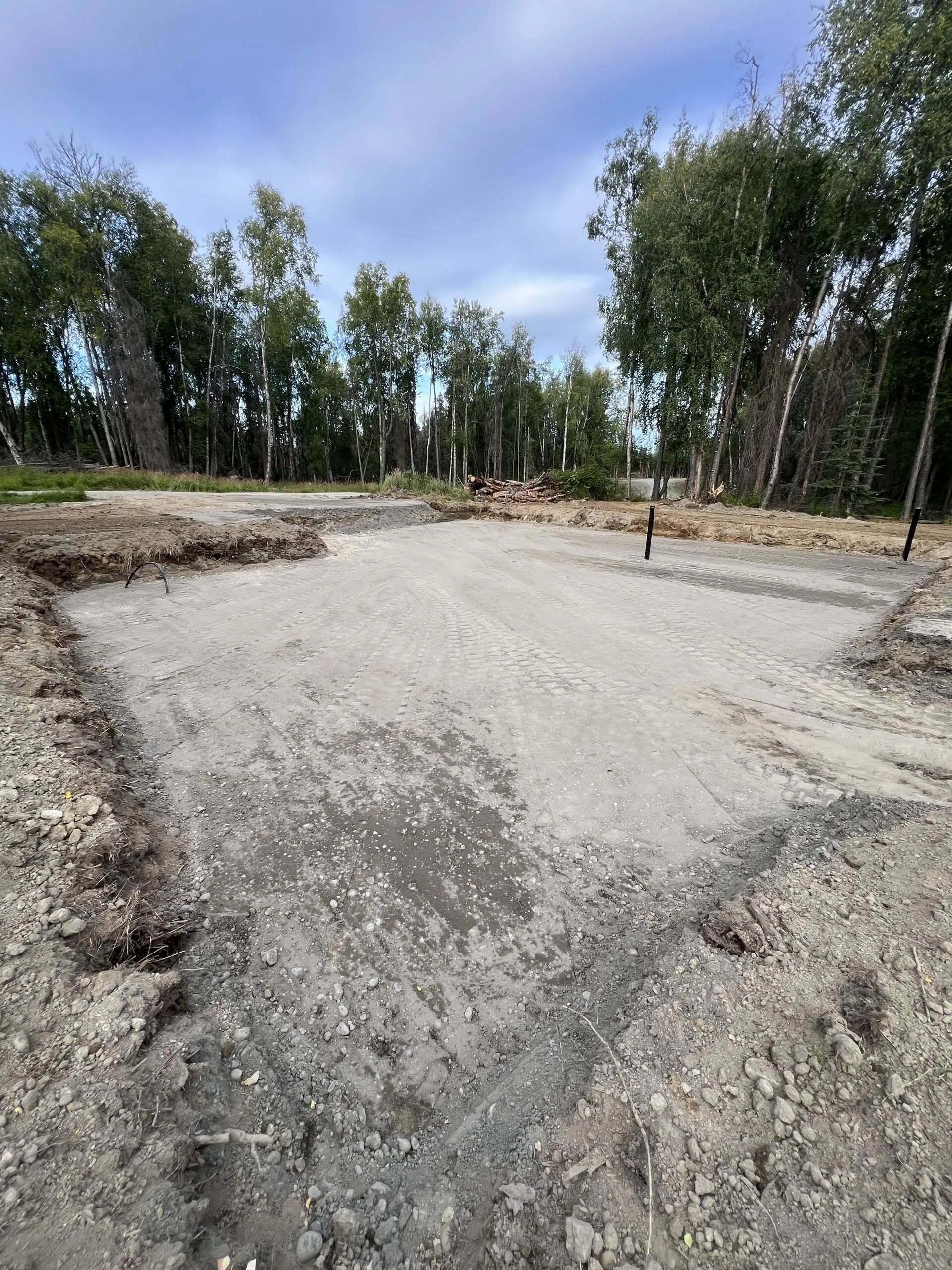
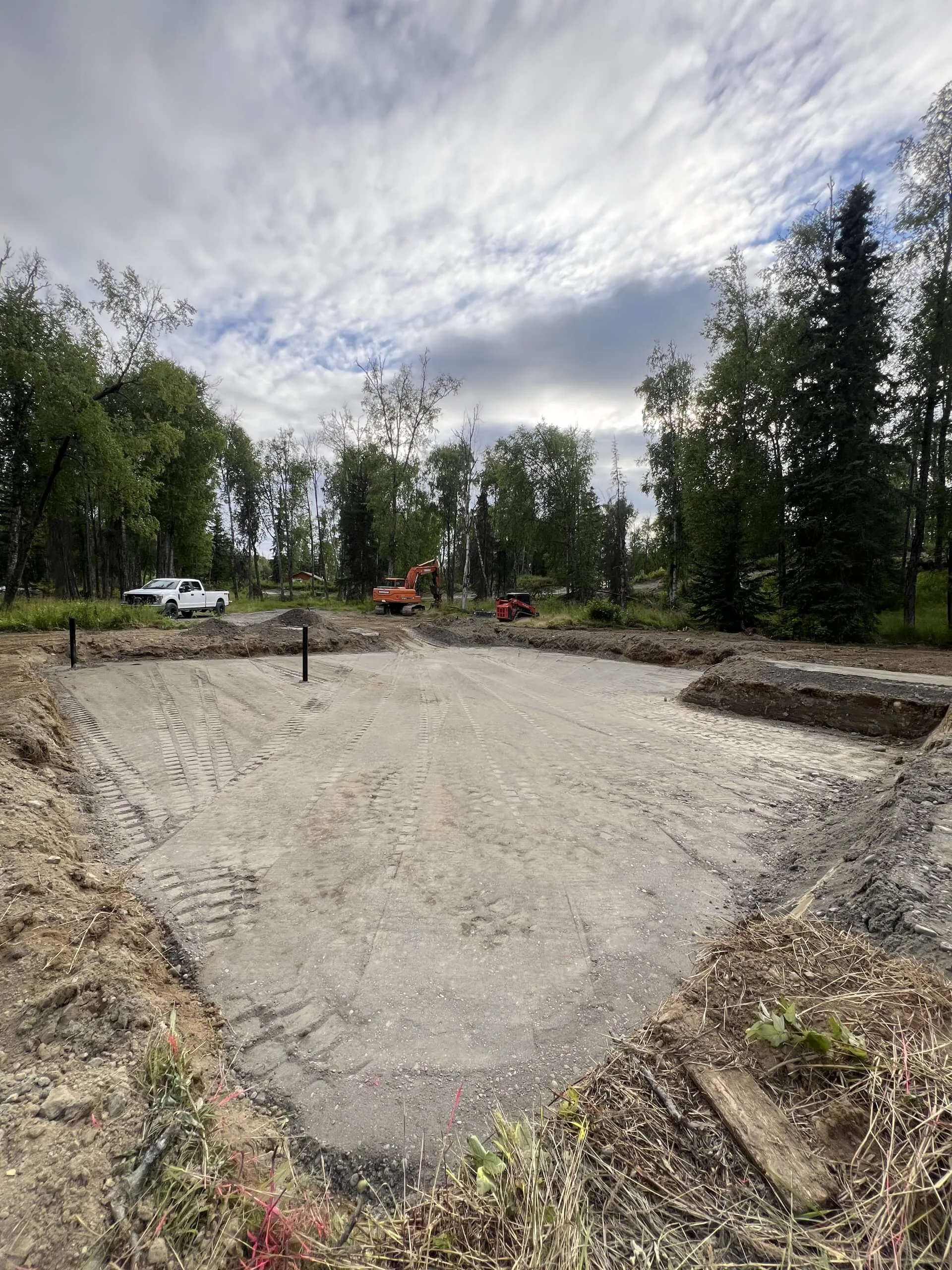
A building pad is the graded, compacted ground a foundation, slab, or parking area sits on. Once the structure goes up, nobody sees it again, which is exactly why it gets rushed. A pad built at the wrong elevation, compacted unevenly, or left without a way to drain can fail inspection, settle under load, or hold water against the foundation for years.
North Florida makes this work less forgiving. Sandy soil shifts and loosens under equipment, clay pockets hold moisture, and the region's heavy summer rain finds every low spot on a site. A pad in Lake City, Fort White, or Alachua has to be planned around those conditions from the start, not corrected after the first storm.
A well-built pad usually comes together in a clear sequence:
- Clearing the footprint: Trees, stumps, roots, and organic material come out completely, since anything left under a slab will decay and settle. This is where full land clearing matters more than mulching.
- Reviewing plans and staking: Engineering plans or survey data set the target elevations, and the pad boundaries and grades get staked before rough work begins.
- Rough excavation and fill: Soil is cut and filled to bring the site close to its planned elevations, balancing material on site where possible to avoid unnecessary hauling.
- Fine grading: Final slopes are shaped so water moves away from the pad instead of toward it.
- Compaction in stages: Soil is compacted in layers so the pad meets load-bearing requirements before foundations, paving, or structures move in.
- Drainage around the pad: Where the site needs it, drainage and culvert installation keeps stormwater from collecting at the edges.
Commercial Pads, Shop Pads, and Estate Construction
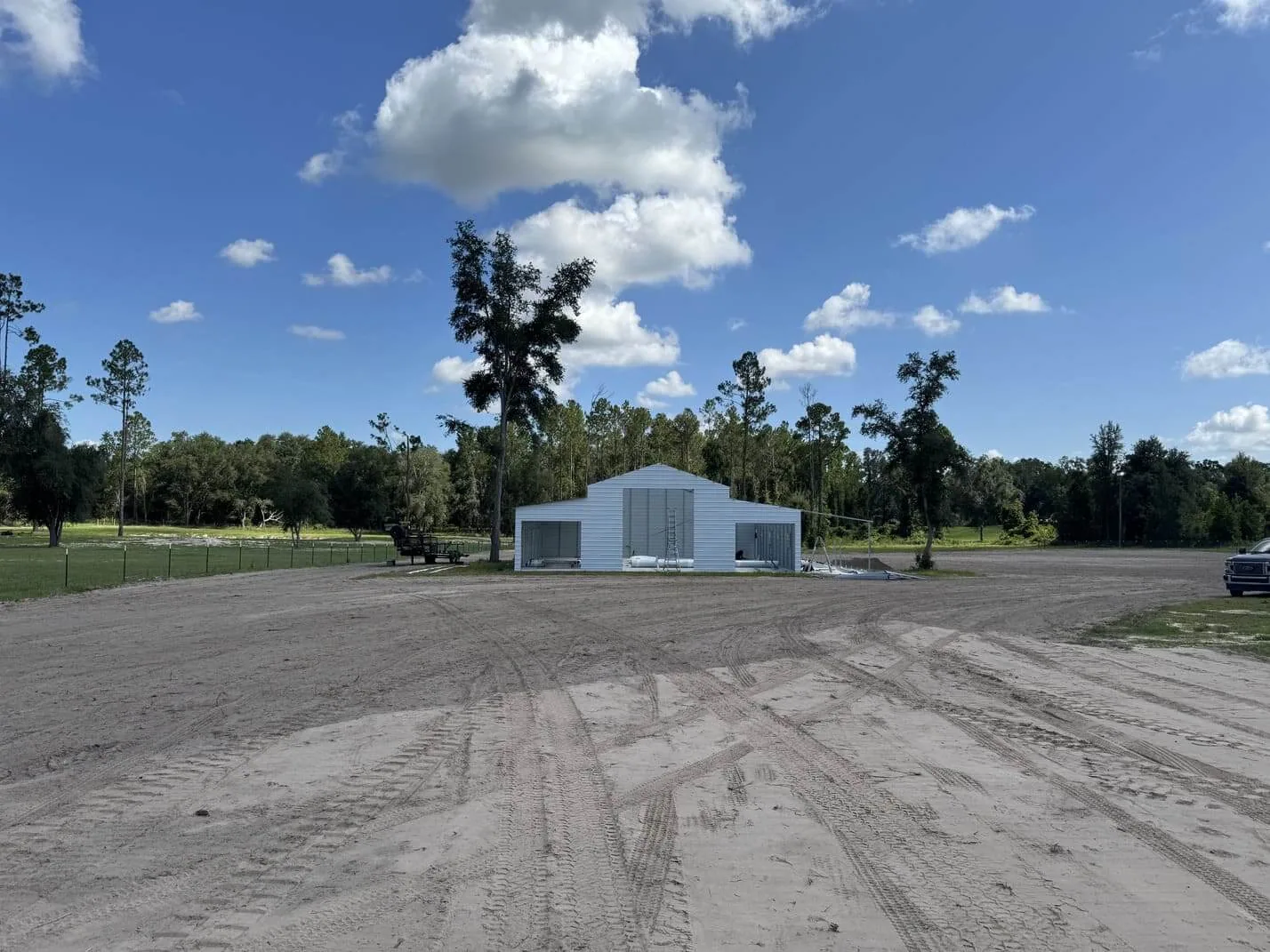
The same principles apply across project types, but the details change. A commercial pad is usually built to engineered elevations and coordinated with civil engineers, surveyors, and the general contractor on a set schedule. A pad for a metal shop or barn on an estate or ranch property still needs proper compaction and drainage, often alongside an access road for deliveries. Estate home sites frequently combine pad work with selective clearing so mature trees around the build area can stay.
Handling clearing, excavation and grading, and drainage with one crew keeps the elevations, slopes, and water flow consistent across the whole site rather than split between contractors.
Questions Builders Ask About Pad Preparation
Can you regrade a pad that has settled or was built incorrectly?
Yes. Settled pads, uneven terrain, and poorly compacted ground can be regraded, with soil cut and filled as needed to bring the site back to the elevations the project requires.
How long does pad preparation take?
It depends on the site size, the soil conditions, and the scope. A smaller pad might take a few days, while a large commercial site can run several weeks. A site walk gives you a schedule estimate before work begins.
Who handles permits for grading work?
Permit requirements vary by county and project scope. Apex Earthworks coordinates with your engineer or civil designer and works alongside your general contractor to keep the project compliant.
Start Your Build on Ground That Is Ready for It
Fixing a failed pad after a structure is built costs far more than building it correctly the first time. Apex Earthworks walks the site, reviews the plans, and prepares building pads across Lake City, Live Oak, Alachua, and the surrounding 75-mile radius that are graded, compacted, and ready for what comes next.